The complete English fan's guide to New York, New Jersey and MetLife Stadium for the 2026 tournament Final: hotels, transport, pizza and matchday tips.
Last updated: May 2026
🎫
Matches hosted8 matches · including the Final
🏟️
StadiumMetLife Stadium · 82,500 capacity
✈️
Nearest airportNewark (EWR) · 20 min by road; NJ Transit to Manhattan 40 min
🌡️
June temperatures28 °C avg high · warm, occasionally humid
🚇
Stadium transitNJ Transit rail from Penn Station (40 min to stadium area)
⭐
Best forThe Final, big-city culture, partner trips
City at a Glance
New York City is the one almost every English visitor has a mental picture of before they arrive, and the genuinely surprising thing is how the actual place still beats the picture in your head. The five boroughs hold around 8.3 million people; the wider metropolitan area spanning New York, New Jersey, Connecticut and even bits of Pennsylvania pushes a touch over 20 million, making it the densest, busiest, most globally-connected urban region on the continent. For the 2026 tournament, the venue is across the Hudson in East Rutherford, New Jersey, but the centre of gravity for visiting fans will absolutely be Manhattan, Brooklyn and the surrounding boroughs.
The vibe in early summer is brilliant. By June the brutal winter is a distant memory, the parks are properly green, the rooftop bars are open, the days run from a 5.30am sunrise to nearly 9pm, and the city is in the mood to be enjoyed. There will be heat-and-humidity days that test you, and there will be the occasional proper thunderstorm, but the back end of June through the start of July is one of the best windows in New York's calendar. The World Cup will turn it up another notch — the city is hosting eight matches at MetLife Stadium including the Final on 19 July, plus an England group-stage fixture against Panama, and the entire metropolitan region has gone all-in on hosting.
This is the biggest, most international city in the United States by a clear margin. Every cuisine, every culture, every sport, every shop, every language. You can spend a week and not scratch the surface. For an English fan it is the easiest American city to feel instantly at home in: there are proper pubs, proper football culture, big expat communities, direct flights from every major UK airport, and a public transport system that means you do not need a car for anything.
The Stadium & Match Day
MetLife Stadium sits in the Meadowlands Sports Complex in East Rutherford, New Jersey, about eight miles west of Midtown Manhattan as the crow flies. It opened in 2010, has a capacity of approximately 82,500, and is the largest stadium hosting matches at the 2026 tournament. It is shared by the New York Giants and the New York Jets of the NFL — the only stadium in the league shared by two teams. The roof is open, the bowl is steep, and on a sold-out final the atmosphere will be enormous.
The match-day transport story is genuinely good. NJ TRANSIT runs the Meadowlands Rail Line directly from Secaucus Junction station into a dedicated stop right next to the stadium. From New York Penn Station in Midtown, you take any NJ TRANSIT train to Secaucus (about ten minutes) and change platforms for the Meadowlands shuttle (about another ten minutes). The total journey is under thirty minutes door-to-stadium-gates if you time it right. The trains run frequently on match days, and the post-match service is properly resourced — though, of course, the queues to board after the final whistle will be substantial. FIFA is also running coach shuttles from designated pick-up points in Manhattan and Brooklyn.
Driving to the stadium is possible but generally a poor choice given the train option. Parking at the Meadowlands costs $50-$100 on match days, the New Jersey Turnpike approaches will be heavy, and getting back out of the lots after a big match can take two hours.
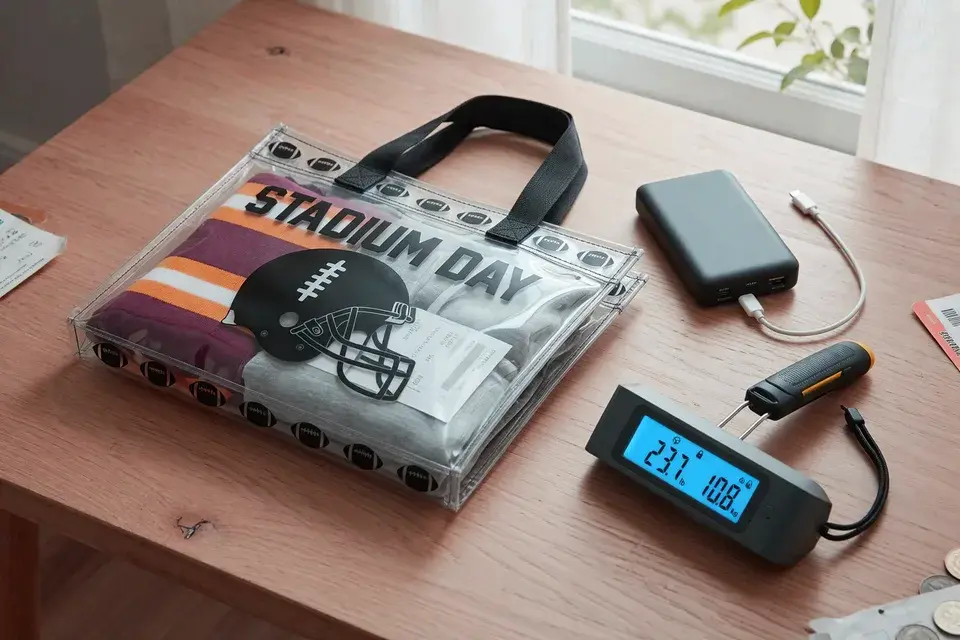
Inside the stadium, the bag policy is strict NFL clear-bag rules (clear bags only, A4-envelope size, with a small clutch as the only exception). The venue is fully cashless. Food and drink concessions include proper New York staples — Sabrett hot dogs, Brooklyn pizza, Shake Shack — alongside the usual stadium options. Beer is served throughout the bowl with cut-off around the 75th minute. The stadium is open-air with no roof; bring a foldable waterproof if rain is forecast and sun cream for daytime fixtures.
A particular note about the Final on 19 July: this is the only Sunday of the entire World Cup that the whole city will fundamentally stop for. Hotels are booked out as far in advance as anyone can remember, transit will be at capacity, and the Manhattan fan zone on the West Side is expected to be the biggest single fan gathering in American sporting history. Get yourself in position properly early.
Where to Stay
Midtown Manhattan — $300-$700/night. The classic visitor base. Times Square, Broadway, Central Park to the north, Grand Central and Penn Station for trains, and the bulk of the city's bigger hotels. Pros: walking distance to most major sights, brilliant transport connections in every direction, easy NJ TRANSIT to the stadium. Cons: the most expensive part of the city, crowded with tourists, can feel impersonal.
Lower East Side and East Village (Manhattan) — $250-$500/night. More characterful, less tourist-heavy, packed with bars, restaurants and independent shops. The boutique hotel scene here is genuinely good. Pros: brilliant nightlife on your doorstep, easier to feel like a local, properly walkable. Cons: longer trip to the stadium, fewer chain hotels.
Williamsburg (Brooklyn) — $220-$450/night. The hipster heartland that has somehow stayed hip. Smart boutique hotels, rooftop bars with skyline views, the best concentration of restaurants in Brooklyn, easy L train into Manhattan. Pros: properly cool neighbourhood, great food, beautiful Manhattan views, a real sense of place. Cons: longer journey to Midtown and the stadium (allow an hour each way), the L train was historically a weak link though service has improved.
Jersey City and Hoboken (New Jersey) — $180-$350/night. Across the Hudson on the New Jersey side, with PATH train service into Lower Manhattan in fifteen minutes. Hoboken in particular has a charming, walkable old town with a proper Irish pub scene. Pros: significantly cheaper than Manhattan, much closer to MetLife Stadium (you can be there in under thirty minutes on a good run), excellent skyline views from the waterfront. Cons: not actually New York, less for casual tourist wandering, you will spend more time on PATH trains.
Getting Around
The New York subway is the best urban public transport network in North America. It runs 24 hours a day, covers all five boroughs, has 472 stations, and is the single most efficient way to get around the city. A single ride costs $2.90, but the system now uses OMNY contactless payment — tap your phone, Apple Watch or contactless bank card at the gate and it charges automatically with a daily fare cap of $34 for unlimited rides after the twelfth tap in a week. No more buying tickets at machines.
Above ground, the bus network fills the gaps. NJ TRANSIT trains run from Penn Station to most of New Jersey including the stadium. The PATH train runs to Jersey City, Hoboken and Newark. Metro-North runs north into the Hudson Valley and Connecticut. The Long Island Rail Road runs east to Long Island.
Taxis still exist, in the iconic yellow form, but most visitors use Uber and Lyft instead — the price is similar and the app is easier. Walking is the secret weapon: Manhattan is small. Times Square to Central Park is fifteen minutes on foot. The Brooklyn Bridge walk is forty minutes and one of the best free things in the city.
The three main airports — JFK, LaGuardia and Newark — all have train or bus connections into the city, but Newark in particular is convenient if you are coming for the tournament because NJ TRANSIT runs from the airport directly to Penn Station and onward to the Meadowlands. JFK is connected to the subway via the AirTrain; LaGuardia is the closest but has the worst transit links and you will likely end up taking a bus or ride-share.
Food & Drink
Joe's Pizza (Bleecker Street, Greenwich Village) — The classic New York slice. A folded plain cheese slice eaten standing at the counter for about $4. Open until 4am. There is a reason it has been there since 1975.
Lucali (Brooklyn) — Walk-in-only Brooklyn pizzeria in Carroll Gardens, widely considered one of the very best in the country. Pies only, no slices, no reservations, byob. Queue early in the evening and they will give you a return time. The wait is worth it.
Katz's Delicatessen (Lower East Side) — The pastrami sandwich at Katz's is a religious experience. Get a ticket on the way in, queue at the cutter's counter, tip the man slicing the meat $2-$3 for a slightly better cut. Allow $30 for a sandwich the size of your head.
Russ & Daughters (Lower East Side) — Open since 1914, the temple of New York Jewish appetising — smoked salmon, sturgeon, whitefish salad, proper bagels. Eat at the cafe around the corner or queue at the shop counter for takeaway.
Di Fara Pizza (Midwood, Brooklyn) — A pilgrimage. Dom DeMarco hand-made pies in a tiny ramshackle shop in deep Brooklyn for sixty years before his recent retirement; his family now runs it and the standard has held. The square slice is the pick.
Things to Do Beyond the Match
Central Park — The eight-hundred-acre lungs of Manhattan. The Bow Bridge, Bethesda Fountain, the Sheep Meadow, Belvedere Castle, the boating lake, the Reservoir loop run. Bring a coffee and wander for two hours. Hire a bike at the south-east corner for a fuller loop.
Statue of Liberty and Ellis Island — The Statue Cruises ferry from Battery Park is the only way out. Book ahead, especially for crown access. The Ellis Island Museum of Immigration is the bit a lot of visitors skip but should not.
Empire State Building and Top of the Rock — Both have brilliant views. Top of the Rock arguably wins because the view includes the Empire State itself. Book sunset slots in advance.
Brooklyn Bridge walk — Forty minutes across the East River from City Hall to DUMBO. Cobblestoned streets, brilliant Manhattan skyline photo spots, and Grimaldi's Pizza waiting on the Brooklyn side.
The Met (Metropolitan Museum of Art) — Three million objects across two million square feet on the east side of Central Park. The Egyptian wing alone takes two hours. Pay-what-you-wish for New York State residents, $30 suggested for everyone else.
MoMA (Museum of Modern Art) — Picasso, Van Gogh's Starry Night, Warhol, the Matisse cut-outs. A serious afternoon. Booking ahead is essential.
The High Line — A 1.5-mile elevated former railway turned into a linear park, running through the West Side from the Whitney Museum up to Hudson Yards. Best at golden hour.
Broadway show — Almost any show. Use the TKTS booth in Times Square for same-day half-price tickets to top-tier productions.
Hidden Gems
Roosevelt Island Tramway — A small aerial cable car running from 59th Street and Second Avenue across to Roosevelt Island in the East River. Takes a swipe of your OMNY card, gives you a brilliant skyline view, and almost no tourists know about it.
The Cloisters (Upper Manhattan) — Part of the Met, in Fort Tryon Park at the very top of Manhattan, dedicated entirely to medieval European art and housed in a building made of bits of actual French monasteries. Peaceful and otherworldly.
Smorgasburg (Williamsburg, Saturdays; Prospect Park, Sundays) — The biggest outdoor food market in America, with about a hundred independent vendors, running every weekend April to October. Brilliant lunch.
The Tenement Museum (Lower East Side) — Guided tours through actual preserved nineteenth- and twentieth-century immigrant flats in a real tenement building on Orchard Street. One of the most quietly moving museum experiences in the city.
Day Trips
Atlantic City, New Jersey (1.5 hours south by car, 2.5 hours by bus) — The original boardwalk gambling town. Faded glamour, casinos, the saltwater taffy, the boardwalk. A peculiarly American day out and a useful change of pace.
Philadelphia (1.5 hours south by Amtrak) — Independence Hall, the Liberty Bell, the Philadelphia Museum of Art Rocky steps, the Italian Market, a proper Philly cheesesteak at Pat's or Geno's. Trains from Penn Station run hourly. A brilliant single-day or overnight trip.
Washington, DC (3 hours south by Amtrak Acela) — The Capitol, the White House, the Smithsonian museums (all free), the Lincoln Memorial. A long day trip if you start early; better as an overnight. Acela first class is worth the upgrade for the comfortable seats and free food.
Sports Culture
New York is the densest concentration of professional sport in America. The Yankees and the Mets play Major League Baseball at Yankee Stadium and Citi Field respectively. The Knicks and the Nets play NBA basketball at Madison Square Garden and the Barclays Center. The Rangers, Islanders and Devils play NHL ice hockey. The Giants and Jets share MetLife for the NFL. The US Open tennis comes to Flushing Meadows every August.
For football specifically, the metropolitan area has two MLS clubs and the rivalry is becoming proper. New York City FC, the City Football Group club, currently play various home games at Yankee Stadium and at Citi Field while waiting for their dedicated stadium in Queens to open. The New York Red Bulls play at Red Bull Arena in Harrison, New Jersey — an excellent purpose-built football ground with a serious atmosphere. The Hudson River Derby between the two has steadily become one of the better MLS rivalries.
For watching matches in pubs, New York is genuinely spoiled for choice. The default English pubs are The Football Factory inside Legends in Midtown (which has been the de facto England supporters' club bar for years), Smithfield Hall in Chelsea, The Globe in Murray Hill and Banter NYC in the East Village (specifically Aussie-leaning but full Premier League schedule). Brooklyn's The Black Sheep Pub in Cobble Hill and Greenpoint's Tørst also pull serious matchday crowds.
Practical Tips for English Fans
Tipping is 18-22% in restaurants, $1-$2 per drink at the bar, $1-$2 per bag for hotel porters. New York tipping culture is fierce — bills will often include a "suggested tip" line at 18%, 20% and 25%.
Drinking age is 21. Bars will ID anyone who looks under thirty-five. Carry your passport — UK driving licences are sometimes not accepted.
Sales tax in NYC is 8.875%, added at the till. Clothing and footwear items under $110 are exempt. Hotel bills add a further 14.75% plus $2 per night occupancy fee.
June weather is warm and increasingly humid: highs around 24-28°C with the occasional heatwave pushing into the low 30s. Pack lightweight clothes, a foldable waterproof and comfortable walking shoes.
The subway is your friend. Tap any contactless bank card or phone at the OMNY gate. There is a $34 weekly cap.
Walk on the right on pavements, stairs and escalators. New Yorkers will tell you in no uncertain terms if you are blocking them.
Drinking in public is illegal, including in most parks. Open alcohol on the street is a ticketable offence.
Tap water in NYC is famously excellent — it is the secret to the bagels and the pizza. Refill your bottle anywhere.
Times Square at peak hours is to be endured, not enjoyed. See it once, then avoid it.
The Empire State Building observatory queue gets brutal — book a timed ticket online.
Tipping at airport bars and food courts is still expected at 15-20%, even if you are just grabbing a coffee.
Pickpockets and bag-snatchers work the busy tourist areas — Times Square, the Brooklyn Bridge, Penn Station and the subway during the rush. Front-pocket your wallet, zip your bag.
Crossing roads — drivers turning right on a green light at the same time you have the walk signal is normal. Look both ways even when the man is green.